The Benefits of Adjustable Height Pedestals for Raised Tile Flooring: When to Consider a Substructure System
When is the additional cost worth it.
John Gill
9/23/20255 min read
Introduction to Adjustable Height Pedestals
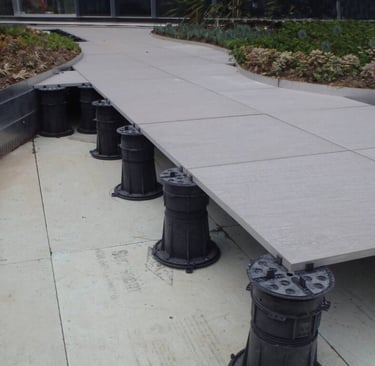
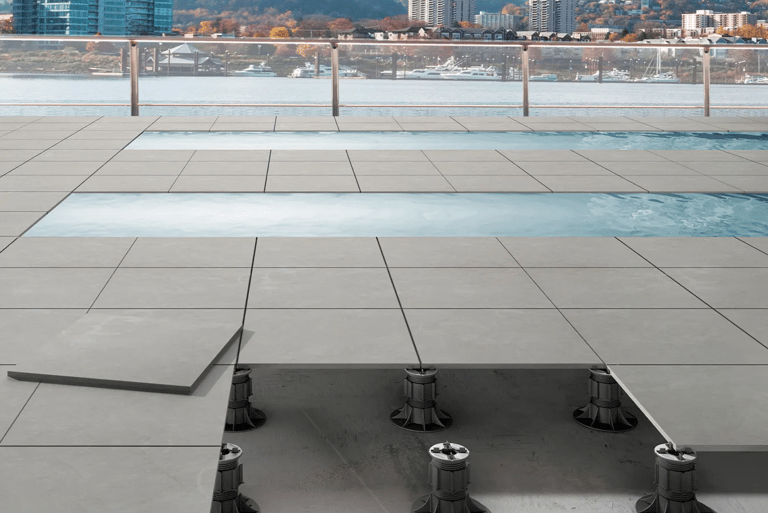
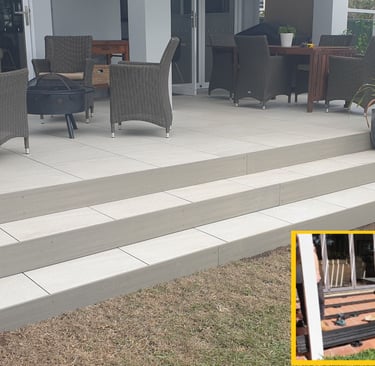
Adjustable height pedestals have become a popular solution for installing raised tile flooring and decks. These systems offer a practical and cost-effective way to create a stable and level surface, accommodating various architectural designs and outdoor landscapes. With adjustable height pedestals, you can easily manage the elevation of the deck, ensuring they remain even and properly aligned.
Cost-Effectiveness of Adjustable Height Pedestals
One of the significant advantages of using adjustable height pedestals is their affordability. They allow for quick installation without the need for extensive groundwork. This feature not only saves time but also reduces labour costs, making it an attractive choice for contractors and homeowners alike. Elevated decks and tile flooring installed with these pedestals provide an aesthetic appeal while ensuring optimal drainage beneath the surface, preventing water accumulation that could lead to long-term damage.
Understanding the Fundamentals of Deck Tiles
Definition and Purpose of Deck Tiles
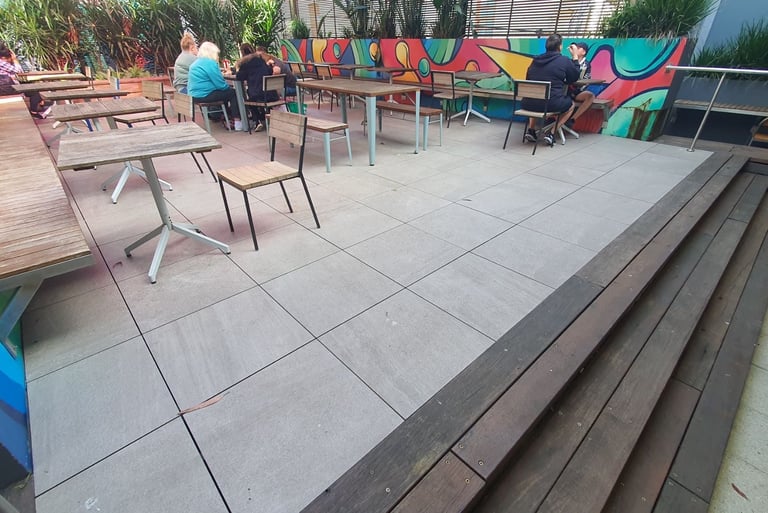
Deck tiles are modular pieces made from stone, porcelain, timber, or composite materials. They interlock or sit neatly together to create a usable outdoor surface over concrete slabs, rooftops, balconies, or waterproof membranes. Their purpose is to provide a fast, attractive, and practical finish without the complexity of traditional decking.
Advantages of Using Deck Tiles
Simple installation — usually resting directly on adjustable pedestals.
Design flexibility — modularity allows for different patterns and easy tile replacement.
Drainage and ventilation — the gap created by pedestals allows airflow and water runoff.
Access to services — tiles can be lifted for inspection or repairs below.
Durability - tiles can have BBQ's or fire pits placed on them.
In most projects, a pedestal-only system is the most cost-effective, efficient, and widely used way to build a tile deck.
When to Consider a Substructure System
While adjustable height pedestals offer numerous benefits, there are instances when adding a substructure system becomes necessary. For areas experiencing heavy loads or increased foot traffic, a substructure can provide additional support, enhancing the overall durability of the flooring system. Furthermore, if the installation site contains uneven or unstable ground, a substructure system can help to distribute weight evenly, reducing the risk of shifting or settling over time.
Additionally, in environments where extensive temperature changes may cause expansion and contraction, a more rigid substructure can mitigate potential stresses on the tiles. This added stability is particularly relevant in climates with harsh winters or sweltering summers, where conventional height pedestals might not suffice for long-term reliability.
Benefits of Adding a Joist/Bearer Sub-Structure
Long-Term Stability
Pedestal-only systems can sometimes suffer from tile “rocking” if pedestals shift slightly. A sub-structure locks everything together, eliminating movement and creating a stable, solid platform.
Spanning Larger Distances
If your deck needs to bridge services, ducting, or uneven areas, joists can span across with fewer supports. This reduces the number of pedestals required and creates more under-deck clearance.
Ease of Integration
Sub-structures make it easier to:
Build ramps or transitions.
Create straight, continuous support lines for large tiles.
Attach clips or restraint systems.
Combine with other materials such as composite or artificial grass.
Durability and Lifespan
By spreading loads evenly and preventing individual tile movement, sub-structures often extend the service life of both tiles and pedestals.
The substructure
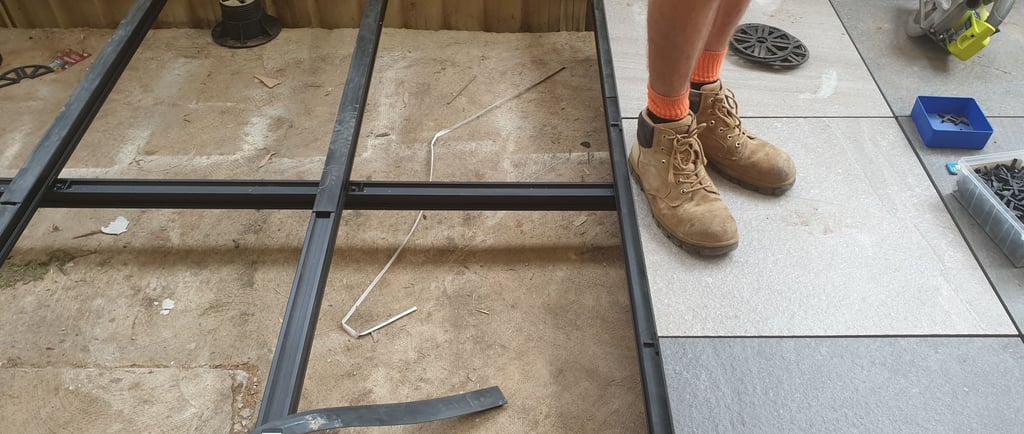
When constructing a deck, conversations always revolve around the finish. Colour, material, size etc. are all discussed and often the substructure requirements are overlooked. There are two types of substructure, fixed and floating. Fixed have footings, posts, bearers and joists made from timber, steel, aluminium or composite. These decks are held to the substrate via the posts being installed into the footings or fixed directly to the substrate using stirrups and brackets.
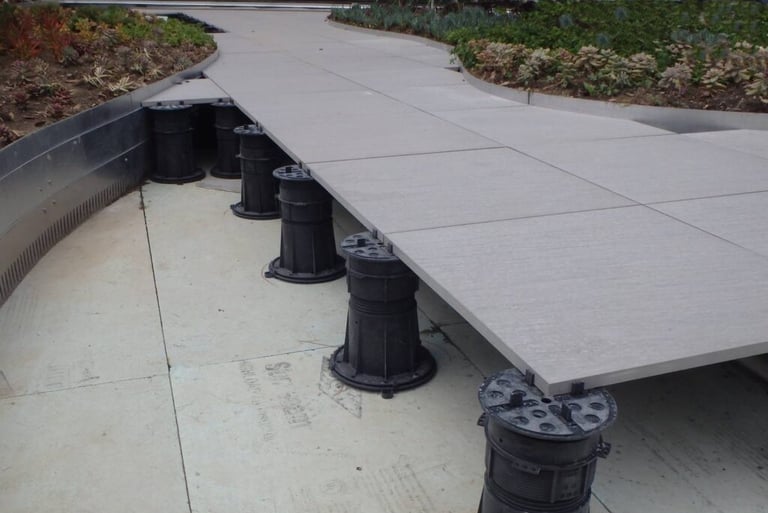
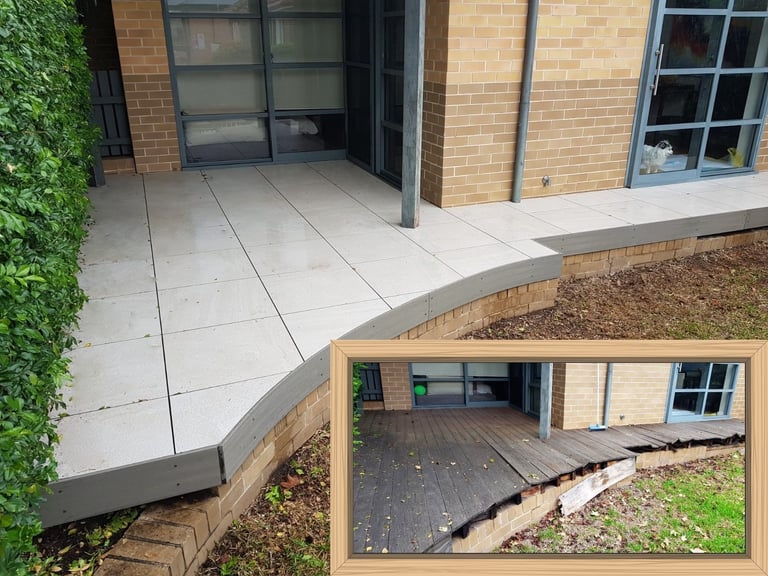
The second type is when a deck is to be constructed over a waterproof membrane or in areas that cannot have any penetrations in the substrate. These decks are constructed to "float" above the substrate and are held down either by weight alone or by fixings around the perimeter. Floating decks often use adjustable height pedestals instead of posts. Whilst the substrate is often sloped for drainage, these pedestals are used to compensate for any slope in the substrate and provide a level surface for tiles, bearers or joists.
Whilst there are two types of decks, fixed and floating, there are also different ways of constructing each. This article discusses tile decks supported by pedestals only or pedestals and substructure.
Exploring the Concept of Sub-Structures
What Is a Sub-Structure?
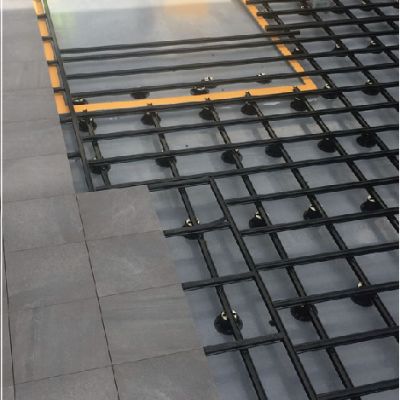
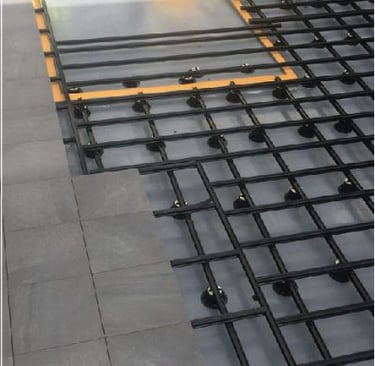
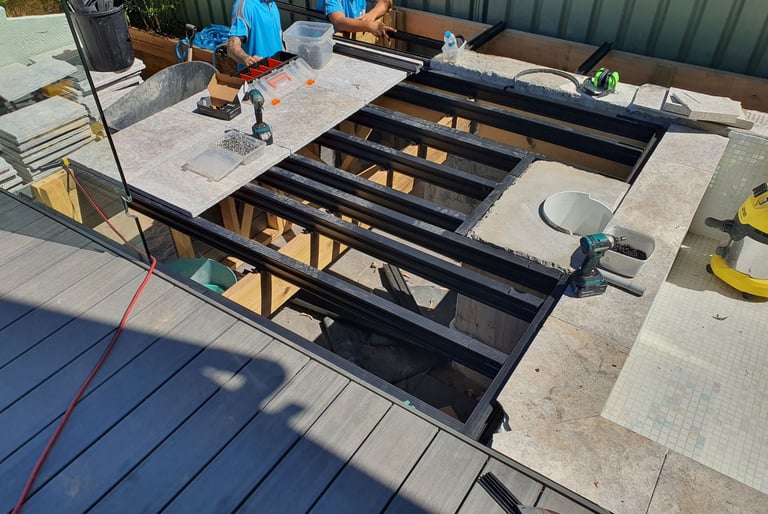
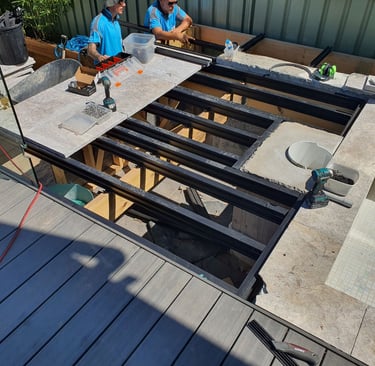
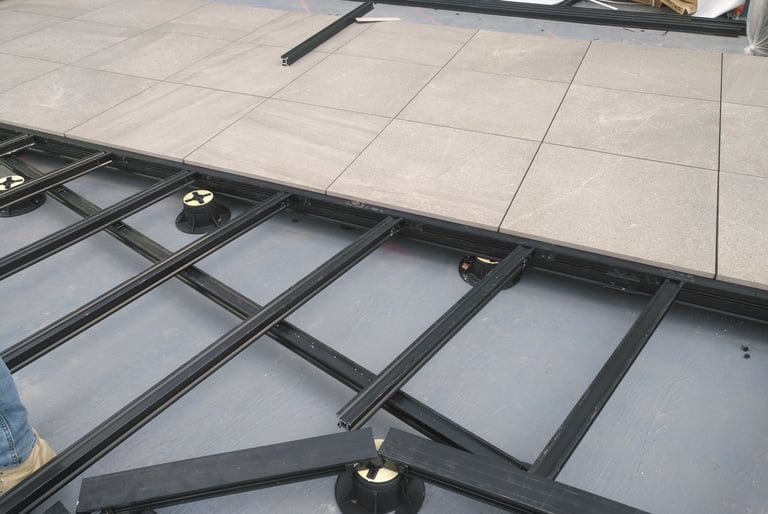
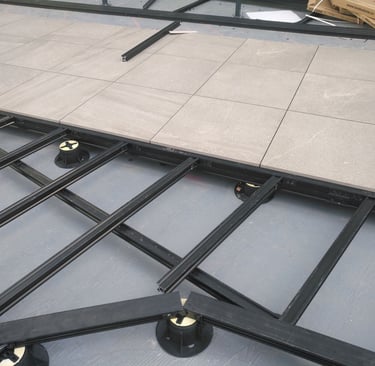
A sub-structure is an added framework of joists or bearers, typically supported by pedestals, that provides continuous support beneath the tiles. Unlike pedestal-only systems (where each pedestal supports one or more tile corners), a sub-structure creates a rigid platform similar to traditional timber or composite decks. With tile decks, the joists have rubber on the top to reduce vibration and tile movement.
Common Materials for Sub-Structures
Aluminium joists — lightweight, stable, corrosion-resistant. Most commonly used substructure for tile decks.
Steel — very strong, but heavier and prone to rust without protection.
Composite joists — rot-resistant, but may lack stiffness over long spans. - Not suitable for tile decks due to expansion and contraction issues
Treated timber — cost-effective, but requires ongoing maintenance. - OK for bearers but should not be used for joists due to timber movement over time.
Potential Drawbacks of a Sub-Structure
Added Cost and Time
Joists, brackets, and fixings increase material and labour costs. For low-level decks with little slope, this expense may not be justified.
When to Upgrade Beyond Pedestals
Height Considerations
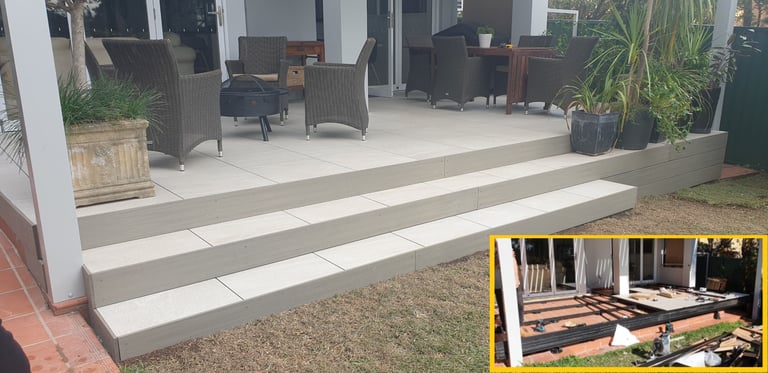
For low-level decks (close to the substrate), pedestals alone are the cheapest and simplest option. But as deck height increases, the number of pedestals required grows significantly — and cost advantage fades. Above ~300–400 mm, a joist/bearer system usually becomes more economical.
5.2 Substrate Conditions
If the existing surface is uneven, sloped, or includes voids, machinery, or services, pedestals alone may not provide stable support. A sub-structure simplifies alignment and ensures a level finish.
5.3 Traffic and Safety
For high-traffic public spaces, or where safety is critical (elderly/disabled access, ramps, or commercial installations), a rigid sub-structure reduces risks of rocking tiles and tripping hazards.
Summary
Pedestal-Only (Standard System)
Best for: residential balconies, rooftops, low-level patios.
Strengths: cheapest, fastest, no framing required.
Limitations: more pedestals needed at height, potential for minor movement.
Pedestals alone are the standard and often sufficient choice for most tile decks, particularly small, low-level, and cost-sensitive projects.
6.2 Pedestal + Sub-Structure (Enhanced System)
Best for: tall decks, uneven substrates, commercial/high-traffic use.
Strengths: long-term stability, easier spanning, less tile movement.
Limitations: more cost, longer build.
A joist/bearer sub-structure is recommended where:
deck height is significant,
spans or voids must be covered,
stability and safety are paramount, or
long-term durability is prioritised.
The right system depends on your site conditions, budget, and performance expectations.
Sales and Showroom
Clever Building Products
64 Nuwarra road,
Moorebank, NSW, 2170
0425 288 812
info@safepave.com.au
By Appointment only