
"Why There Are No Safety Standards for Pedestal Tile Systems in Australia, And Why That's Dangerous"
The lack of Standards for raised tile installations is not only costing builders and customers a lot of money, but it is dangerous.
PEDESTAL AND RAISED FLOOR TILES
John Gill
10/2/20255 min read
Understanding the Current Landscape of Flooring Installations
In today's construction industry, the installation of pedestal and raised flooring systems has gained significant popularity. However, the lack of established standards for these installations has led to considerable differences in materials and installation techniques, leading to safety risks and increased costs for both builders and customers. Without a uniform set of guidelines, the reliance on various individual practices can result in dangerous situations, potentially compromising the integrity of the flooring systems.
Safety Risks Associated with Lack of Standards
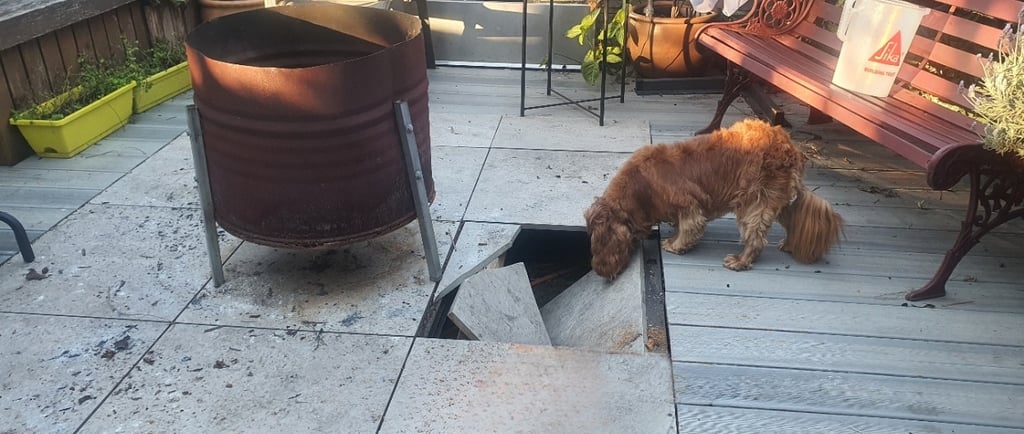
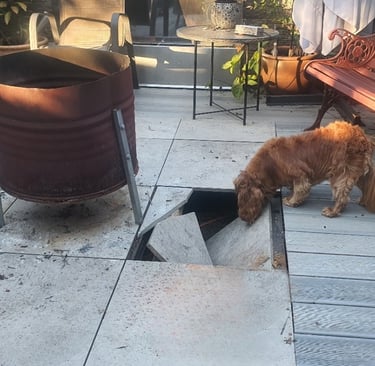
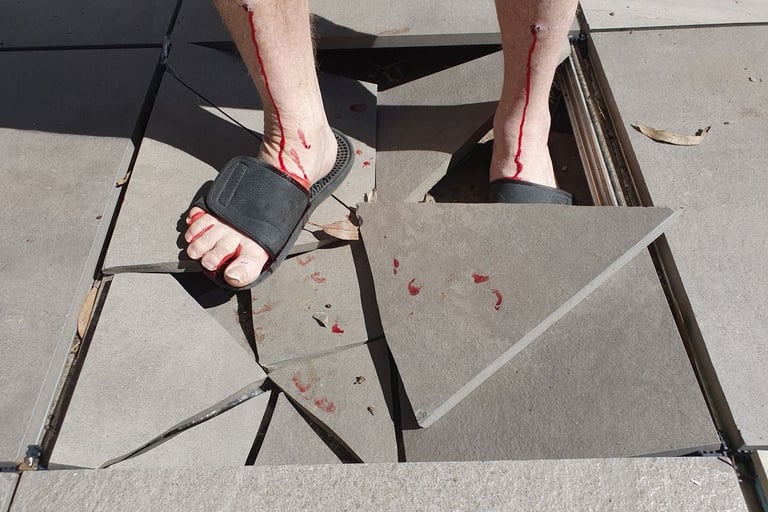
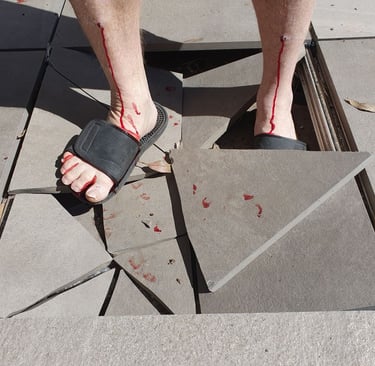
The absence of minimum standards for raised tile installations poses critical safety risks. When installations are executed without a consistent framework, there is a heightened likelihood of structural failures. For instance, improperly installed raised flooring can lead to uneven surfaces, which increases the chances of slips, trips, and falls, ultimately risking the safety of those in the vicinity. Moreover, substandard materials and installations may not effectively support the weight loads they are designed for, leading to potential collapses. Tiles rocking on pedestals, breaking under impact or excessive loads, lifting in high winds are just some of the problems that can cause injury.
Economic Implications for Builders and Customers
In addition to the inherent safety risks, the financial implications of inadequate installation standards are substantial. Builders, faced with the fallout from improperly installed systems, often incur additional expenses related to repairs, replacements, and rectifications. These costs inevitably trickle down to customers, who may find themselves paying much more than they anticipated. Substrate and building damage caused by broken tiles can be considerable, particularly when not discovered. Penetrations in a waterproof membrane can cause problems years later. There are many examples of tile decks / raised floor installations having to be removed and replaced with other materials. I know of one instance where 3000sqm of tiles on pedestals at a school was replaced by a composite deck at a total cost of over $2.5 million because inferior tiles had been used. Consequently, the construction sector urgently requires established minimum standards for raised tile installations to reduce these economic burdens, fostering a more sustainable and reliable building practice.
Overall, the need for comprehensive and enforceable standards for pedestal and raised flooring installations cannot be overstated. Addressing these pressing concerns not only enhances safety but also saves costs for builders and customers alike. As stakeholders in the construction industry, it is essential to advocate for the development and implementation of rigorous guidelines to ensure the quality and safety of flooring systems in future projects.
"SafePave is one solution available now, before standards catch up. See how SafePave works →"
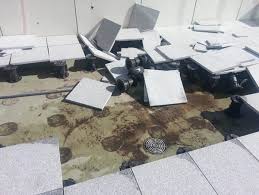
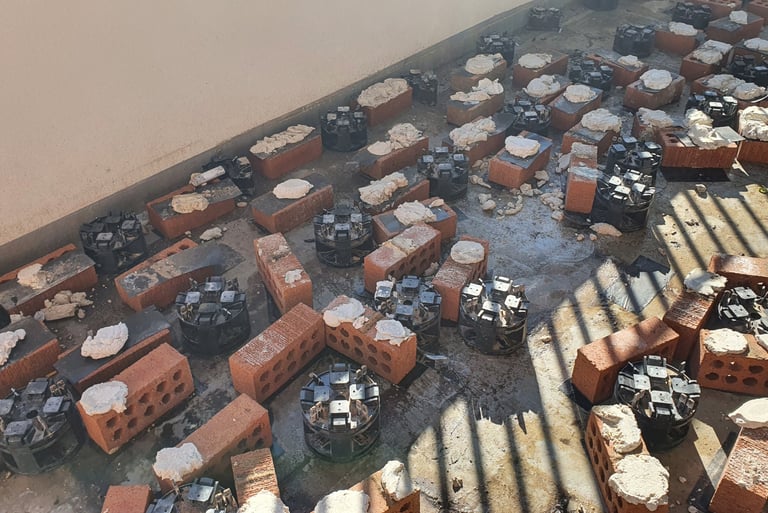
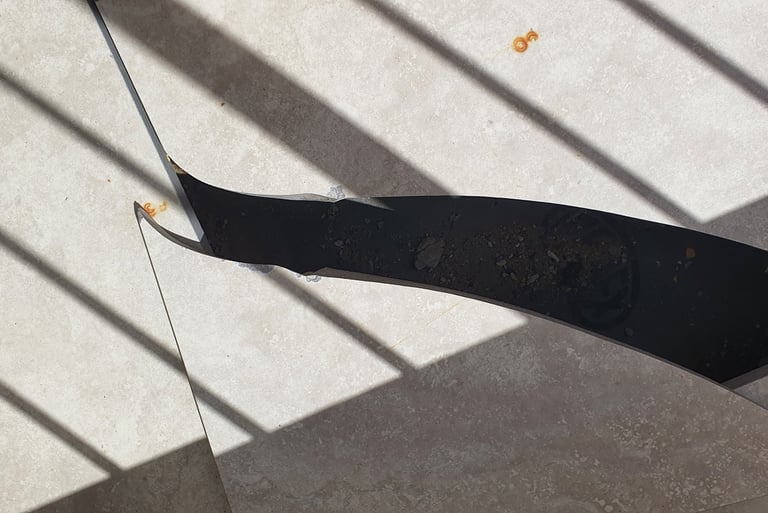
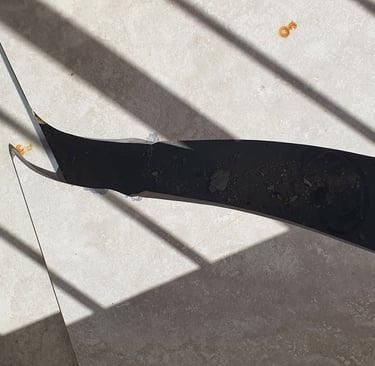
Tiles lifted by high wind
Bricks used for additional support
Tiles shattered by impact
"Proposals for New Standards in Pedestal Tiles"
A detailed proposal for benchmark test methods and performance criteria for pedestal tile systems used on rooftops, balconies and podiums in Australia.
1. Scope
This proposal defines testing and classification methods for pedestal or raised tile systems to ensure:
• Resistance to fracture, impact and breakthrough;
• Stability and robustness under concentrated and uniform loads;
• Resistance to wind uplift and environmental aging;
• Safe walkability following accidental cracking;
• Compatibility with waterproofing membranes and pedestal supports.
2. Reference Standards
Category Key References
Tile mechanical strength ISO 10545-4 / AS 4459.4 – Breaking strength and modulus of rupture
Tile impact resistance ISO 10545-5 – Coefficient of restitution (modified for full-tile testing)
Raised access flooring EN 12825:2001 / CISCA Rolling & Uniform Load Tests
Adhesive durability ASTM D3330 – Peel adhesion (for bonded reinforcement layers)
Wind uplift ASTM E330 or EN 1991-1-4 (wind action) adapted for tile systems
Test Type Description / Method Summary Purpose Typical Acceptance Criteria
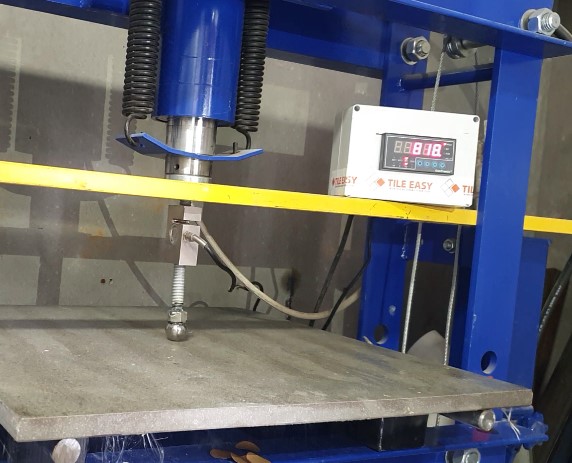
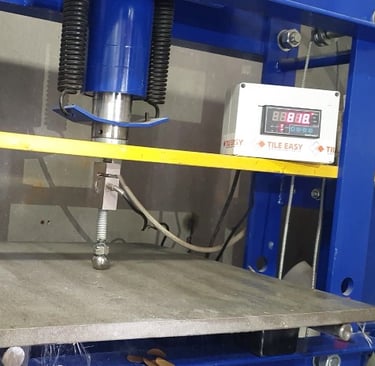
Point-Load / Static Load Full-size tile on pedestals; 50 mm Verify load capacity and No cracking or breakthrough at 1.8 kN
hemispherical indenter at centre deflection limits. deflection ≤ L/200
and quarter-points.
Residual-Load After Crack induced then reloaded to design load Show walk-on safety ≥ 1.8 kN no breakthrough;
Breakage . after fracture. ultimate ≥ 2.7 kN
Uniform Load Distributed plate load test. Measure stiffness and permanent set. Residual set ≤ 0.5 mm after 24 h.
Hard-Body Impact 4.5 kg, 50 mm hemisphere drop from 600 mm. Simulate tool drop. No penetration; cracks retained.
Soft-Body Impact 5 kg leather bag from 1.0 m. Test global stability. No rocking, displacement ≤ 1 mm.
Repeated Impact 20 drops at 300 mm height. Assess fatigue resistance. No breakthrough; <10% stiffness loss.
Flexural Strength ISO 10545-4 / AS 4459.4 Establish baseline strength. Report MPa; used for grading.
three-point bending.
Impact Damage Diameter ASTM C1870 (50.8 mm ball). Measure damage zone. ≤ 80% of untreated control.
Pedestal Rocking / Slip Lateral load test on assembly. Check pedestal friction. No rocking <2 mm lateral deflection.
Dead-Load / Creep Sustained 1.8 kN load for 7 days. Check long-term stability. ≤ 1 mm additional deflection.
Thermal / Moisture Cycling −20 to +70 °C wet/dry cycles. Check durability. ≥ 90% retention of properties.
Wind-Uplift Resistance Negative pressure or uplift rig. Check tile restraint. No uplift at design wind pressure.
Membrane Wear Cyclic micro-slip under load. Check membrane protection. No visible wear after 100k cycles.
3. Required Tests
The Table below outlines recommended tests, objectives and minimum acceptance criteria
4. Classification & Grading
Strength/impact grading with support tables (standards-ready)
What: Convert the above results into a grade (High/Medium/Low) linked to allowable support layouts (corner-only, with mid-span rail, centre pedestal).
Why: Implements the recommendation to rate tiles by strength + impact + support requirements,
Grade Minimum Modulus of Rupture Minimum Impact Energy Recommended support layout
(No Breakthrough)
High ≥ 25 MPa ≥ 12 J Corner pedestals only
Medium ≥ 15 MPa ≥ 8 J corner + centre support / rigid board
Low ≥ 10 MPa ≥ 5 J edge + centre support/rigid board
5. Installation Performance Criteria
• Max tile lippage: ≤ 1 mm
• Max slope: 1 in 80 (1.25%) before substructure required
• Pedestal spacing tolerance: ± 2 mm
• Installer accreditation required
• Edge restraint: perimeter tiles restrained to structure
• Wind uplift restraint mandatory for balconies and rooftops
6. Reporting Requirements
Each test report must include apparatus description, calibration data, specimen details, load–deflection curves, failure modes, and compliance statements.
7. Rationale
The test suite directly addresses pedestal-tile risks such as rocking, membrane wear, cracking, and wind uplift. It replaces outdated thickness-based assumptions with performance-based metrics, enabling innovation and future material improvements.
Sales and Showroom
Clever Building Products
64 Nuwarra road,
Moorebank, NSW, 2170
Technical and Partnerships 0425 288 812
info@safepave.com.au
By Appointment only
Products
Resources
Legal
SafePave Tools and Accessories
Suppliers
Retrofit and Sales 0425 288 813